Motion capture meets medical science

*
*the research is still ongoing
Our support is completed from our side
from game & film tech to medical research
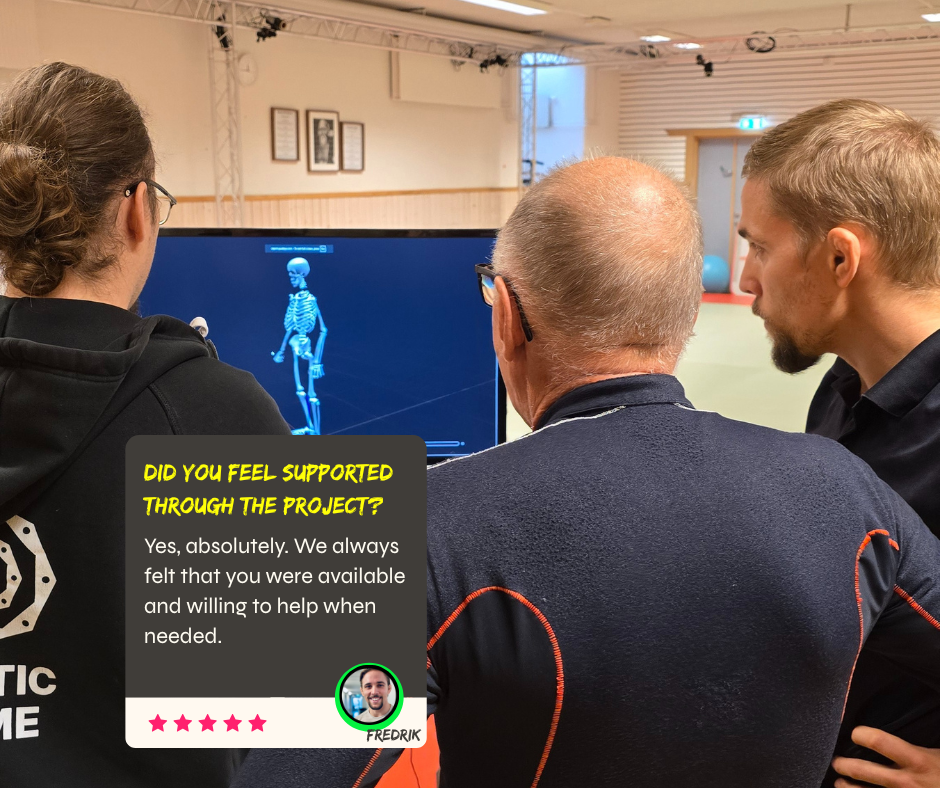
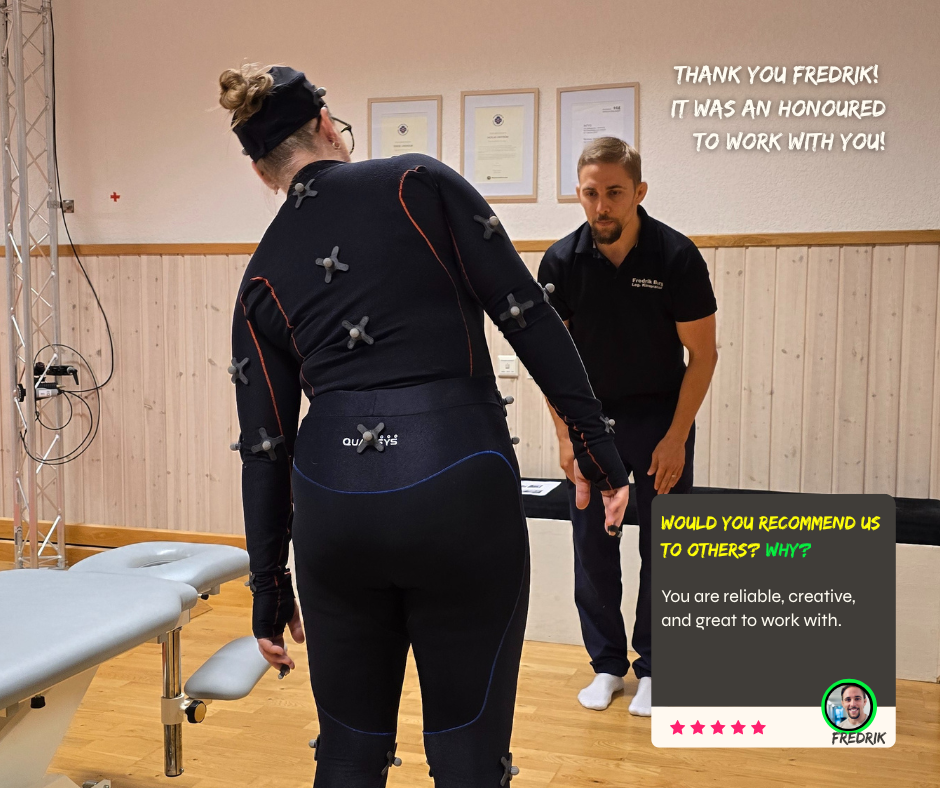
At Campus Skellefteå, cutting-edge motion capture (MoCap) technology - originally developed for film and game production - is now being used to objectively analyze human movement in a medical research setting.
🎯What Motion Capture Means in This Project
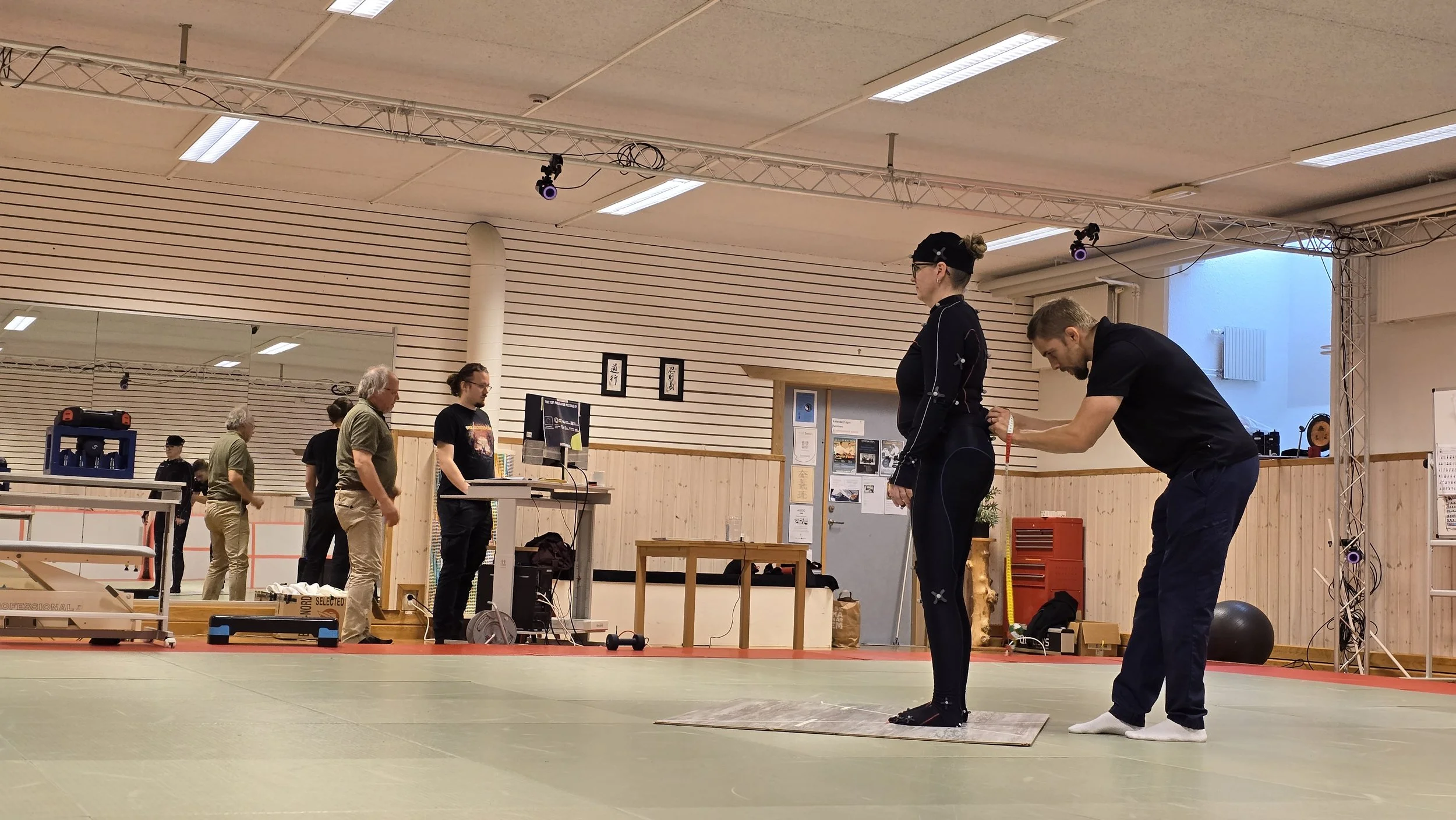
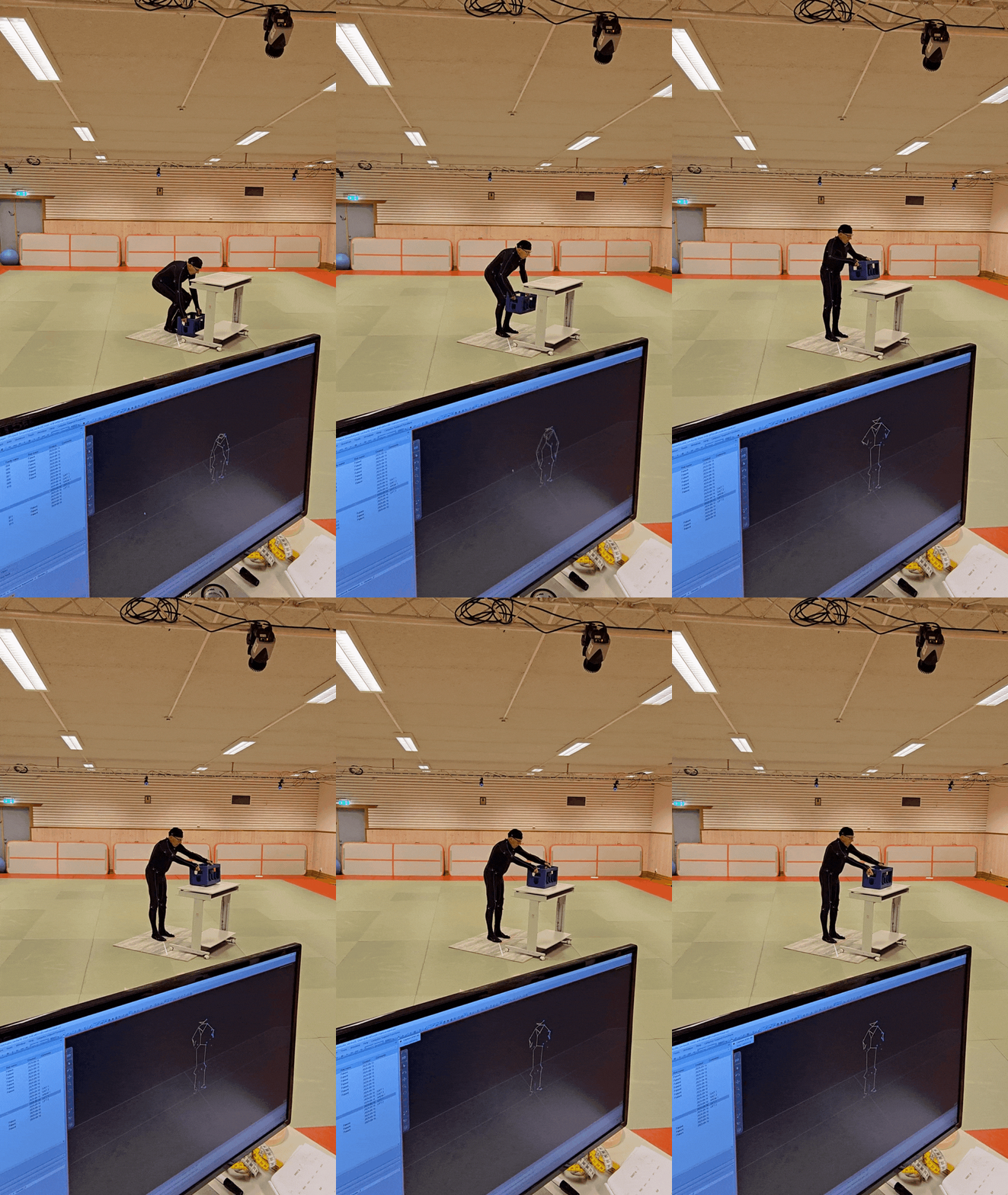
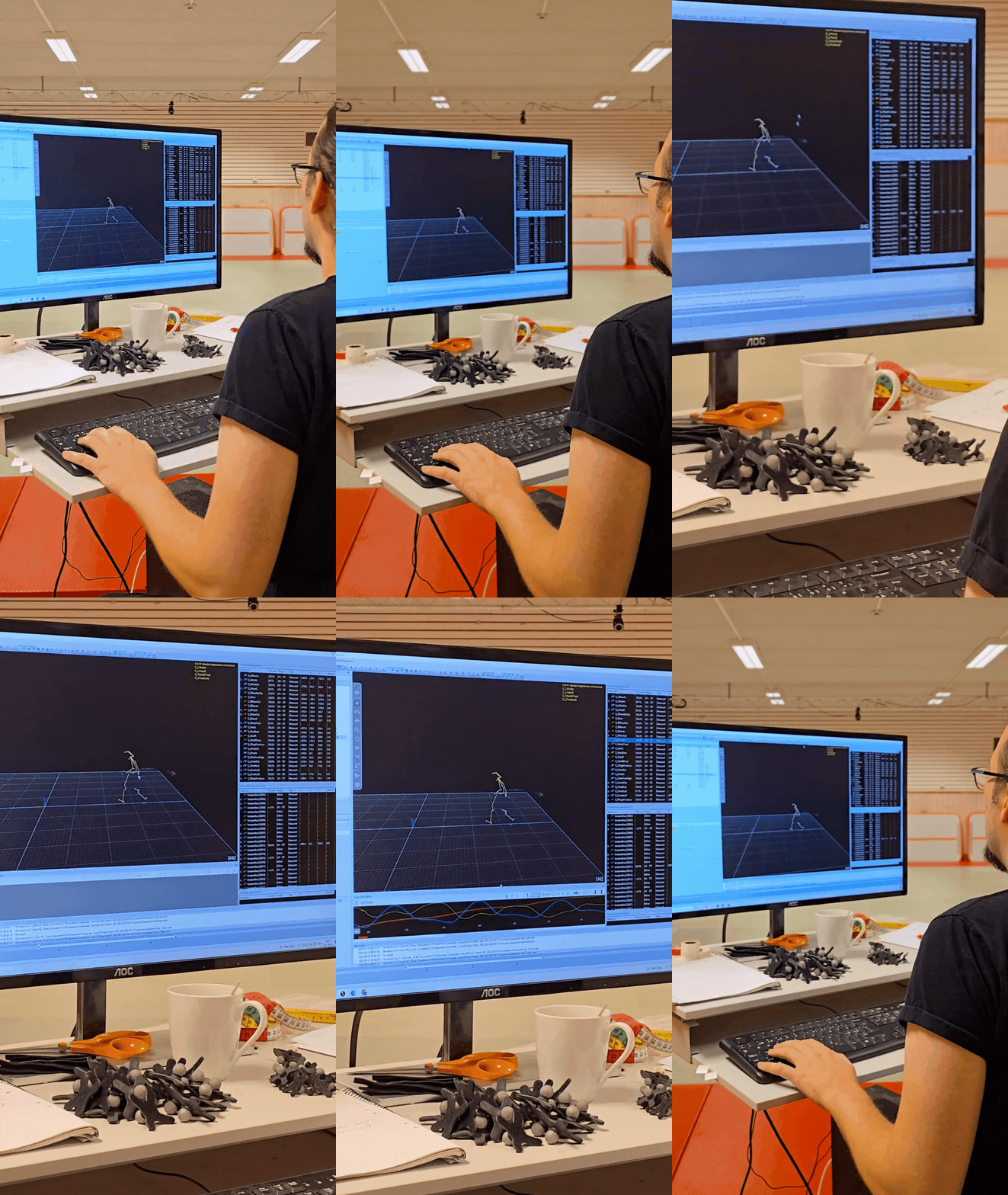
Motion capture systems record detailed body movements with millimeter-level accuracy using specialized cameras and software - much like the systems used to animate characters in games and films. In this study, that precision allows researchers to quantify how patients move during everyday actions such as walking, bending, and lifting - data that would be almost impossible to capture by eye alone.
Rather than relying on subjective reports of pain or stiffness, MoCap gives objective, digital measurements of how a person’s body moves before and after treatment. This lets researchers see exactly how different therapies affect movement patterns.
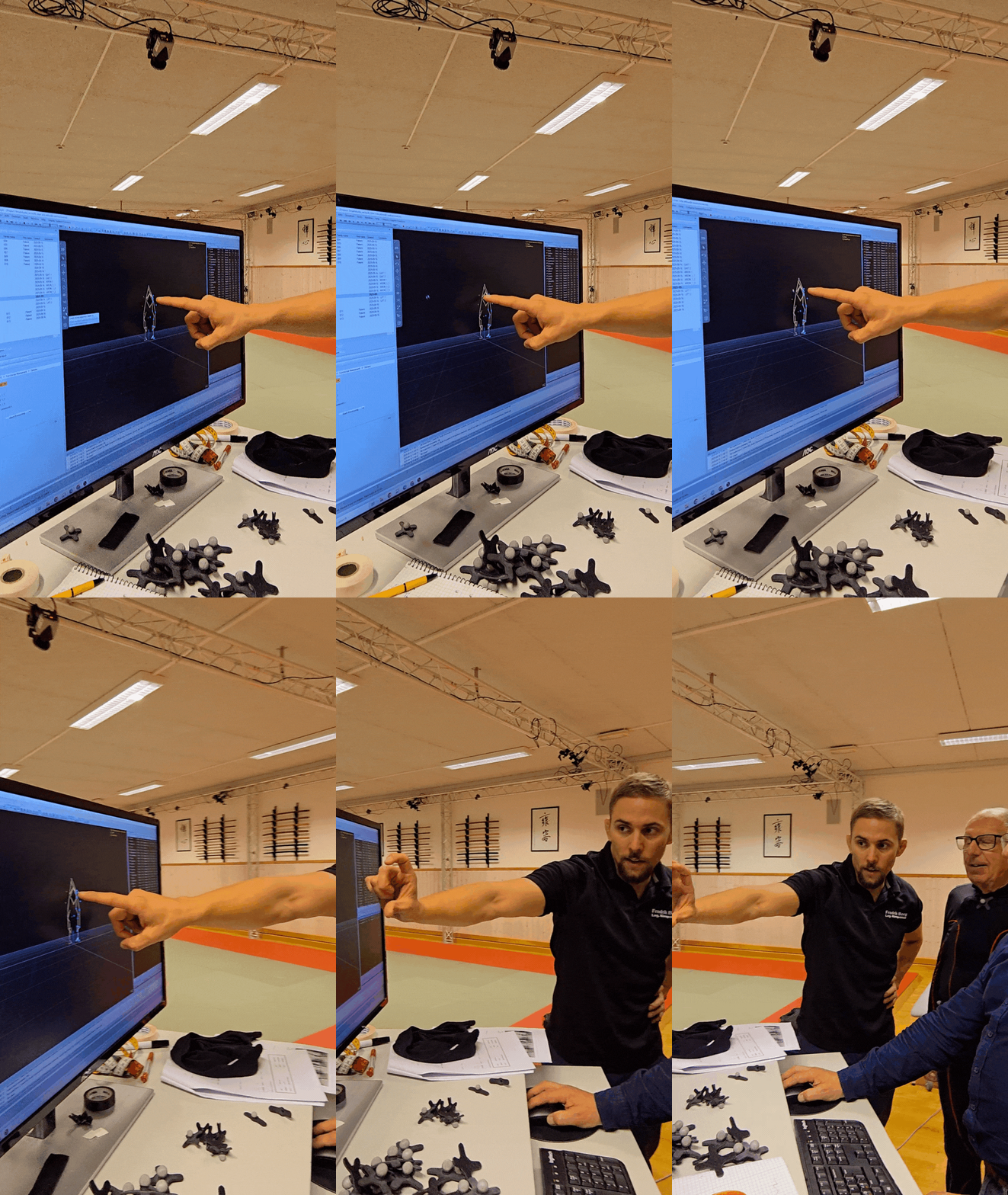
🧪 How It’s Used in the Back Pain Study
The research team (including Karolinska Institutet and the Scandinavian College of Chiropractic) is studying three treatment approaches for people with chronic back pain. Motion capture makes it possible to:
Track compensatory movement patterns that patients develop to avoid pain
Measure changes in movement with precision after interventions
Compare effects between treatments like spinal manipulation, medical exercise therapy, and placebo
Identify subtler effects that traditional observation might miss
As one of the researchers described it, what was once based on subjective experience can now be confirmed with actual movement data thanks to the precision offered by motion capture.
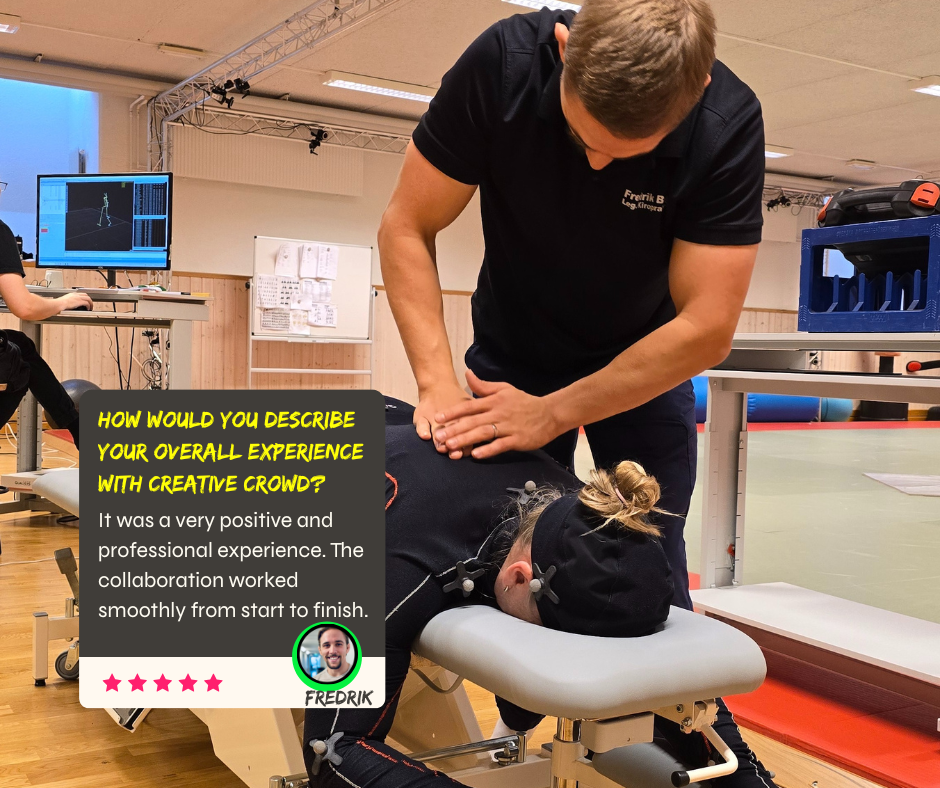
Karolinska Institutet’s experience working with us